
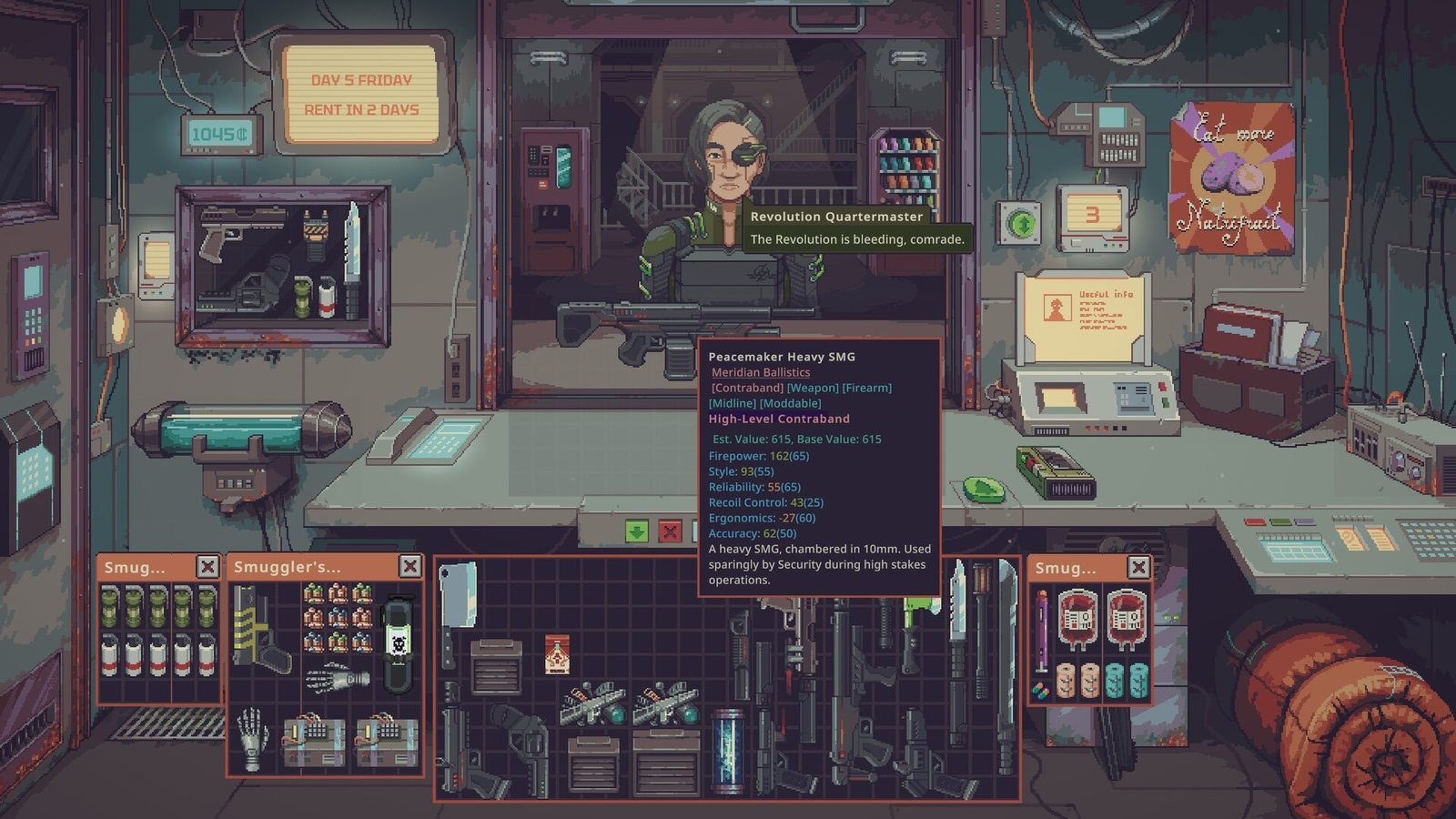
Probably Stolen Beginner Guide: Your First Ten Days
A day is eight steps: open, call a customer, inspect, quote, sell, close, go out, sleep. Rent kills you, so buy insurance daily and keep rent covered.

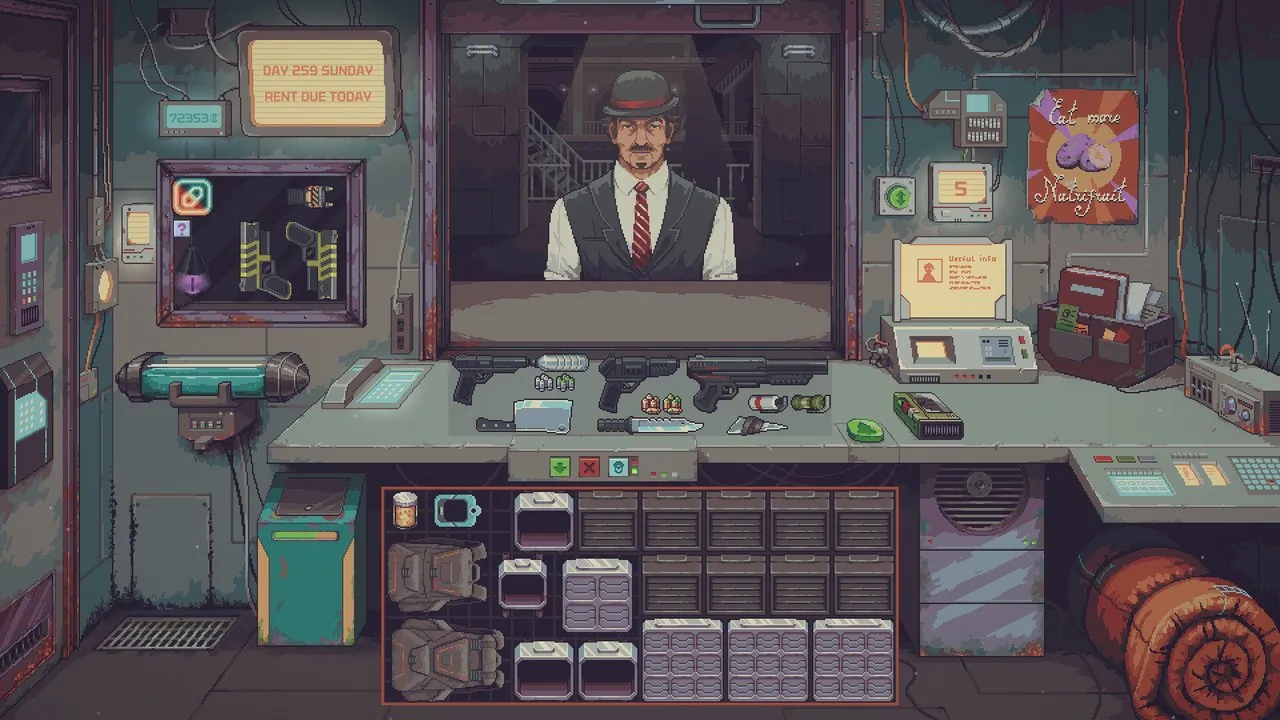
A day in Probably Stolen is eight steps: open the shutters, call a customer, inspect the goods, quote a price, sell, close, choose what to do at night, sleep. That is the whole game.
What actually kills you is not a bad deal. It is rent. Rent only goes up. So the single best thing you can do at the start is buy insurance every day. It scales with your inventory value, returns stolen goods the next morning, and builds your standing with Joe Wild, whose favours buy shop upgrades.
The eight steps
- Read the calendar first. It shows today’s events and price changes. See a household relief drive, put household goods out. See a water crisis, put water out. Faster than the newspaper.
- Open the shop. Pull the shutters and customers start arriving.
- Call the next customer. One at a time. Nobody is timing you.
- Inspect the goods. Check authenticity: logo, seal, spelling, serial number, whether the packaging is torn. Every item has a category, and every customer wants specific categories. A mismatch means no sale.
- Quote or refuse. You can haggle, but haggling wears the customer down and moves reputation.
- Sell. Your display case does the selling. It does not decide what you sell, it decides who shows up. Keep the categories narrow and the high-budget buyers never appear.
- Close, then pick your night actions. Cleaning, insurance, power, ordering stock, buyer and seller referrals, or a scavenging run. Each one costs money or time.
- Sleep. Rent and events settle, and the next day starts.
Your first ten days
- Day 1: finish the tutorial. Remember three things: keep both sides of the counter clear, keep food in stock, and nothing left on the outer counter overnight survives.
- Days 2-3: low-risk categories only. Household goods and food are cheap and move fast. Get cash flow positive first.
- Day 4: start buying insurance daily. The more your stock is worth, the more it costs, so start early.
- Day 5: first rent payment. Rent rises every week and being late buys you exactly one week of grace.
- Days 6-7: go to the dumping grounds at night. Bring bandages and a small bag. Keep materials for smelting later; junk still sells to Dr. Jackson.
- Days 8-10: convert cash into capacity. The order that works is backpack and storage, then power and batteries, then processing machines. Machines need power, power needs paying for. Do not buy the machine first.
The four places new players get stuck
Rent is short. Sell anything you do not plan to keep. Materials go straight to Dr. Jackson, who always buys them. Then cut optional services; cleaning every other day is enough. Only then take a riskier deal.
Nobody buys my stock. Look at the display case, then at price and quality. Too narrow, too cheap or too low-quality and high-budget customers simply do not spawn. Widen the categories and put your best item out.
I got hurt. Minor wounds get worse on their own. Bandages fix them. Always carry bandages before a scavenging run.
I got robbed overnight. Insurance gets your goods back the next morning. Higher store attractiveness means fewer thefts, and attractiveness comes from cleaning, lighting and projector-type machines.
Going out is not free
A night run pushes tomorrow’s opening later and costs you one customer. You get roughly five search attempts, each with a 2.5%-5% chance of a minor wound; a flashlight lowers that. So do not go every night. Go when you need materials or starting capital.
Read these next
- How to buy out the shop: where the credit target comes from, and why you cannot finish it yet.
- Augs: how to spot one and when to shoot: misreading a customer has a price.
- Rat farming: turning one trap in the corner into a steady income line.
- Release date and current build: October 28, 2026, and how the demo differs from the old playtest.