
Probably Stolen Appraisal: Spot a Counterfeit Before You Pay
Rare items need proper appraisal or you overpay. Four checks to run before money changes hands, and what a wrong label costs.
Appraisal is not a single click. It is a checklist. The store page says it plainly: “Rare items need proper appraisal to avoid overpaying.” The same paragraph names the other route — relabelling a counterfeit as genuine — and its condition: you are betting Security will not reach you.
So treat inspection as buy-side insurance and relabelling as sell-side gambling. They are two different decisions.
The four-layer check
One: packaging and seal. Is the case intact, is the seal unbroken? In recorded runs this is the first thing players judge, and nothing else matters until it passes.
Two: indicator and expiry. Medical goods carry an indicator. An empty indicator usually means expired, not “new and unused”. This layer is the easiest to skip and the easiest way to lose money.
Three: serial number and recalled batch. A matching serial number and no recall flag is the minimum pass. The developer patched several exploits that let non-owned items be used as if owned, which is a sign that ownership and batch data are tracked seriously.
Four: colour and printing. Off colours and bad printing are the last signal. Recorded runs include a case where a suspicious pale green turned out to be fine — this layer raises doubt, it does not convict. A wrong call costs you too.
Pass all four, then talk price. If you cannot clear one, do not pay a premium.
Appraisal customers and the appraisal service
The September 14, 2026 patch fixed this line: “Appraisal customers now leave automatically once their business is done” — appraisal customers are a real visitor type in the shop loop.
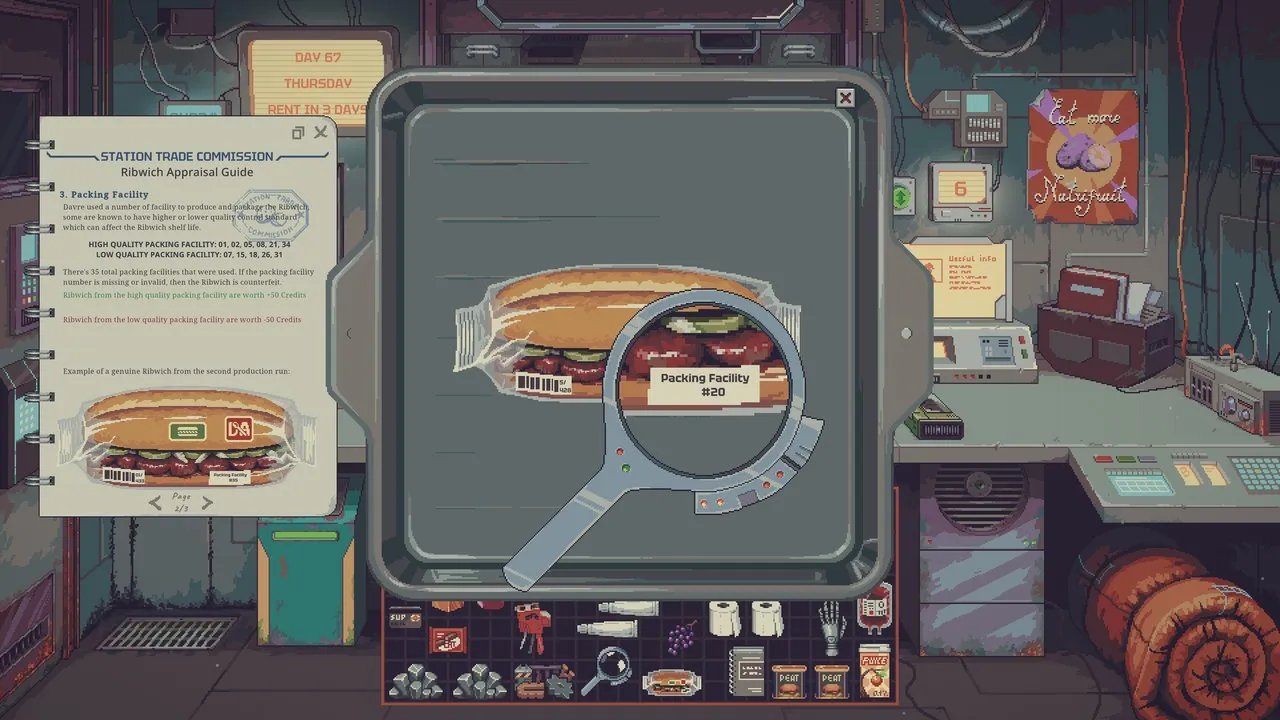
The official store screenshots also show an Appraisal Service panel: an item under the magnifier, with the result stamped Counterfeit. So the game gives you both a hands-on inspection view and a service entry point.
The price, trigger conditions and accuracy of either one are not published.
What a wrong label costs
Relabelling fakes as genuine is an officially described play, but it is not free:
- The developer fixed a bug where a customer confronted the player about an incorrect water quality label on an empty liquid container.
- The developer also fixed a case where offering mislabelled items to an aug caused a reputation loss.
Together those two show the direction of the system: a wrong label gets caught, and getting caught costs reputation. No official numbers exist for how much.
When to walk away from the deal
- The indicator is empty or expired and the seller wants genuine-item money.
- The serial number does not match or carries a recall flag.
- You get one confrontation, and losing it costs reputation you cannot afford.
Player testing shows that confronting a customer can push the price down, but a failed accusation costs reputation. The safer play is to skip the trade rather than gamble reputation on it.
What the developer has not published
No item-by-item counterfeit list, no appraisal service price, no accuracy figures for accusations and no reputation penalty numbers. Every specific judgement above is player testing.
Two things that get confused with appraisal have their own pages: spotting an aug is on the augs page — that question is “is this customer taken over”, not “is this item real” — and water quality labels are on the water page.